Monday, December 10, 2007

Catching Up


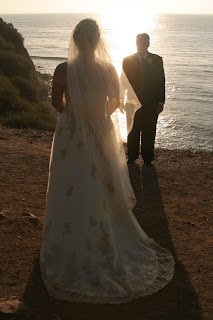
Whew! Well, I got married, helped my husband move in, got the thank you notes out, met my deadline for my two Fall articles, got pregnant, had morning sickness for three months, and failed to acheive the advanced proficientcy on the French translation exam for the second time...all since I wrote last!


Things have been pretty crazy around here, to say the least. My biggest acheivement this semester has been fixing 150 wedding photos in photoshop and getting them inot books for my relatives. I have posted some below. Enjoy!


Thursday, August 02, 2007

To Brie or Not to Brie...Part 2

To Brie or Not To Brie…Part 2
By Jennifer Large Seagrave, Wine and Cheese Reviewer


Reprinted from Relationships in the City, August, 2007


Last month I promised to follow up my article on brie with one on delicious alternatives to that very popular cheese choice. Often, though I like the simple earthy, milky flavor of double crème brie, I want to present something a little different to my friends. When I want a great cheese in Salt Lake City, and I want to try it before I buy it and to know that a knowledgeable service person will be there to help me, I always go to Liberty Heights Fresh on 11th East and 13th South.

That’s exactly what I did as I was preparing to write this article. My favorite cheese monger, Antonia Horne, helped me make three exciting cheese selections. I grabbed some anise-flavored flat bread, dried figs, a few olives, an apple and a bottle of Mondavi Zinfandel, and ran over to my friend Juliane’s house for a tasting extravaganza.

We started with L’Edel de Cleron, a lightly washed rind cheese that looks and feels a lot like brie, but is wrapped with a strip of bark and made with a mountain recipe similar to a wonderful raw-milk cheese known as vacherin (small cheese). L’Edel is often called “faux vacherin” because its recipe is similar to that of Vacherin Mont D’Or, but the pasteurization of its milk not only allows it to be sold in the US, but also makes its flavor a little less intense than a true vacherin, which is generally reddish in color, taller and smaller than a wheel of L’Edel, and whose center ripens into a runny ooze perfect for dipping and pouring over fruit and bread.

When I was cheese buyer at The Pasta Shop in Berkeley, CA, I had the opportunity to sell Vacherin Mont D’Or and I can say with certainty that no L’Edel de Cleron I have ever seen or tasted was as pungent, runny, or spectacular as the Vacherin. However, I can say that it makes a great substitute for brie if you are looking for something a little different.

The bark wrapped around its rind, sometimes reported as spruce, sometimes red pine or fruitwood, lends an earthy flavor to the cheese. The center is often very soft and creamy, though I haven’t seen it runny. A mushroomy flavor develops as it ages, and a slightly tannic bitterness provides a counterpoint to the rich cream. I paid about $7 for a good sized wedge of this cheese. It was best with a few garlic stuffed green olives.

The next cheese we got into was another soft, washed-rind cheese, this one made closer to home in Fort Collins, Colorado. It is called ColoRouge, by MouCo Cheese, and while it has certain characteristics similar to French muenster and Livarot, it is an American original. Awarded Best Washed-Rind Cheese by the American Cheese Society in 2004, it is a unique treat not to be missed.

Slightly bitter, with a hint of the pungent barnyard, the reddish colored cheese is molded into a small disc and packaged in a special breathable foil wrapper. The hand-ladled rounds are “smeared,” or rubbed, during a two-week aging process in order to help them develop their red color and distinctive flavor. I chose a particularly young disc, though more aged ones are also very good—softer, maybe even runny, with stronger earth and mushroom flavors.

I tasted butter and cheddar flavors when we tried this straight up with green apple slices. It would go great with just about any picnic food, and the wrapping makes it easy to tote and spread. At $6, I felt like it was a great deal.

Finally, Juliane and I opened the plastic container holding our La Tur. Made in Italy's Piemonte region, in a dairy near Alba, La Tur has been the talk of American cheese circles for at least eight years, and rightly so. It is out of this world.

The creamy, ivory-colored cheese has a thin, natural rind, and comes in a tissue-thin paper cup, sometimes inside a plastic container that holds any juices that run off of it. The texture of even a young La Tur, aged just ten days at the dairy, is similar to triple-crème brie: amazingly supple and velvety.

Made from a mixture of lightly pasteurized sheep, cow and goat’s milk, La Tur’s flavor is more complex and pronounced than the other recommendations I have made. Spread on flatbread and served with calimyrna figs and our red zinfandel, it was outstanding.

This selection is not for the faint of heart, as its aroma definitely will fill your car and kitchen. I keep my left-overs in the plastic container it comes in, in a paper bag, in a Ziploc bag, in my cheese drawer, and I can still smell it when I open the refrigerator door. However, as most aromatic cheeses, its odor is much stronger than its taste. The crème fraiche, herb and mushroom flavors are clean on the palate and leave a long lasting, buttery finish.

At about $10 per cup, these little cheeses make a memorable addition to any creative tasting or party. Your guests will definitely remember La Tur.

You can find out more about MouCo cheeses and Liberty Heights Fresh on their websites at http://www.mouco.com/ and http://www.libertyheightsfresh.com/. If you have any cheese or wine questions or suggestions, please email me, Jennifer Large Seagrave, Wine and Cheese Reviewer, at jenn.large@utah.edu. Happy Tasting!

Thursday, June 28, 2007

Living on The Edge


Living on The Edge
By The Attraction Specialist, Jennifer Large Seagrave

Reprinted from Relationships in the City, July 2007

Last Friday night, my friend Kirsten and I sat silently in darkness, a small fire burning in the pit a few feet from an uncovered sweat lodge surrounded by yucca and sage brush, watching a wispy cloud bank alternately cover and reveal night’s blanket of stars over The Edge Retreat near Fruitland, Utah. Evening had darkened the unnamed valley so filled with green cottonwood and reed grass in the afternoon’s light, and sheer sandstone cliffs riddled with dark creases and crumbling with age still stood silhouetted against the indigo horizon. It was nearly eleven on a moonless night, the call of restless crickets competing with snapping flames.

Crickets are really not an anomaly, but growing up in L.A. and now living in the heart of Salt Lake City, I had forgotten about them. And that seems to be at least a little of what this place is all about: remembering the calm that gets lost in rush hour traffic, supermarket lines and day planners scribbled with to do lists and appointments. The dragonfly-adorned welcome sign outside its entryway reads: “The Edge…you can relax now.” And you really have no choice. If the quiet and beauty of the place doesn’t demand it, the hot tub does.

After a lovely two-hour drive past mountains, meadows and reservoirs and animated by an Amanda Quick romance-on-tape, Kirsten and I arrived about an hour before sunset. We let ourselves into the huge retreat kitchen, where guests store their own food and prepare meals. Gleaned from a friend’s remodel, the rose granite countertops and Sub-Zero refrigerator found their way to The Edge as if by fate, the way all things seem to come home here.

When we talked with owners Suzanne Sullivan and Chris Lang later, while sipping wine on a sun drenched veranda, Suzanne admitted, “I came out here in a Lexus and high heels. When I got here, it was as much a mess as I was, all sage brush and dirt…a little ghost house, sitting up here on the edge of a cliff.” Taking a huge leap of faith and leaving her posh Wilshire condo downtown, Suzanne moved up to the quirky old house in need of a huge amount of work…both her and the house! “I was so messed up, I thought I could do it.” And, little by little, money found its way to the retreat’s coffer, craftsmen found their way to building a bunk house, bath house and guest rooms, and many visitors found peace and solace in its hospitality.

After greeting us, Suzanne showed us around her little piece of paradise. From the architecture to the arrangement of buildings, the place seems to invite a sort of communal unity in both obvious and subtle ways. While the welcome gong in the meeting room lets out a low, pervading call to congregate, the bunkhouses’ two ten-bunk rooms hold workers, friends and retreat mates together in undeniably close quarters.
The Star and Moon Houses hold bedrooms of rustic beauty, but no bathrooms, calling for communal use of the bathhouse. If this sounds like a hardship, think again. This bathhouse holds every comfort and amenity a group could ask for including three shower rooms with pine-lined showers, three water closets and four porcelain pedestal sinks. It is a hexagonal work of architectural mastery, with all the modern luxuries and conveniences.

We stayed in the Sunrise Room, one of two modern guest rooms above the bathhouse, boasting full east-facing windows that certainly did let in the morning light, thankfully delayed a little by high valley walls. After our soak in the hot tub and fire under the stars, Kirsten made use of the deep bath in the Sunset room on the west side of the house while I tried out the showers downstairs. I’ve never used a shower with a head mounted seven feet up; water fell on my hair as if from the sky.

The beauty of The Edge Retreat is hard to describe. I’m not entirely certain the flowers and wood, houses and views comprise it. The humming birds are part of it, and Suzanne herself, who leads a Course in Miracles women’s retreat four times a year together with her teaching partner Sue Borg. But there is also an undeniable, lingering je ne sais quoi about the property that commands peace and completes its beauty. It’s an ethereal magic that hangs about the place, and brings out the part of you that recognizes it. “When I came here I focused on healing my own life,” Suzanne says. “This is all a manifestation. The retreat is within.”

And now she is ready to move on down the road, literally. Looking for the appropriate buyer for the womb in which her life changed and developed, Suzanne plans to move into a smaller cabin a couple of miles away. She hopes The Edge will remain a retreat for those seeking peace and closer relationships with one another. I left there feeling closer to the inner calm I had just about forgotten I had.

You can find out more about The Edge Retreat and its events and amenities on their website at http://www.theedgeretreat.com/.
The Edge Retreat
Email: info@theedgeretreat.comDirect: 435.548.2479Fruitland, Utah

Jennifer currently writes the monthly Attraction Specialist and Wine and Cheese Review articles for Relationships in the City, while pursuing a doctorate in literature. She teaches writing and literature at the University of Utah and University of Phoenix. With ten years of experience in the gourmet food industry and forays into a multitude of religions, her experiences have led her to become a connoisseur of both inner and outer attractions.

To Brie or Not to Brie...Part 1


To Brie Or Not To Brie…Part 1

Reprinted from Relationships in the City, July 2007


Since last month’s Relationships in the City article on “How to Give a Wine and Cheese Party” got you all excited about cheese, I thought it apropos that this month the wine and cheese reviewer should say a little something about cheese. Often, when invited to a get together, even a game night at my friends’ house, I know the hostess will have a bottle of something, and I feel the need to contribute to the party. More often than not, some cheese and a French baguette or seeded flatbread is what I choose.

Frequently the cheese choice we all make when called upon to produce in this fashion is a creamy wedge of brie. But do we buy it because we don’t know what else to bring? We want to be sophisticated, but we want to like what we bring. Brie seems an obvious choice.

Whichever supermarket you frequent, from Smith’s to Costco, Wild Oats to Liberty Heights Fresh, it will have a wedge of brie, and it will most likely cost between $5.99 and $13.99 a pound. Costco describes its basic selection on its website this way: “Margaux de Brie is a 60% double cream soft-ripened cheese.” I wonder how many of us really know what that means. Read on and you will be one of the few.

Reading a cheese label is a little like reading a wine label, especially if the cheese is French. Cheeses in France are regionally regulated like wines, and their labels usually tell where they are made, the official variety name, and what kind of animal their milk derives from (I often find a little picture of a cow, sheep, or goat does the trick for them). When sold in the US, labels also feature an ingredient list consisting of the type of milk used in the making, along with rennet (which curds the milk), cultures (which grow the rind and keep the cheese aging properly), salt and occasionally color.

While this all seems straightforward to us label readers here in the US, the fact that most of us aren’t familiar with French cheese regions, and that nearly all cheese is made with the same four ingredients, makes these labels somewhat unhelpful when it comes to knowing what a cheese will taste like…so you will just have to taste and remember.

A standard double cream (or double crème) brie is a cheese made from whole cow’s milk with enough cream added to bring the butterfat content by dry weight (if you dehydrated it) to 60%. Rather than trying to figure out something rational about this number, the best way to know what 60% butterfat by dry weight feels like in your mouth is to taste some, and remember it. It should feel creamy with a tiny bit of a pungent and earthy flavors. Double crème brie hosts a classic balance of buttery richness and mild flavors; hence its ubiquitous appeal.

A single crème brie, most often Brie de Meaux in the US, is a more flavorful, sophisticated variety of soft-ripened cheese. All brie is soft-ripened--that means the cheese not only has cultures added to the mix when it is curded, but it has a culture patted onto its disk-shaped outside as well. As the bloom (the white, fluffy stuff on the rind) grows, the interior of the cheese becomes softer and more flavorful. Brie de Meaux will taste enough like what you and your friends will expect, but with a little less richness and a little more flavor or grass, straw and mushrooms. At 52% butterfat by dry weight, its lighter texture is more springy than your run-of-the-mill double crème, such as the ever present President or Costco’s Margaux. And because it is made in smaller, artisan production, it costs closer to $15 a pound than a double crème.

If you linger in Costco, or make it to Liberty Height’s Fresh, Wild Oats or another cheesy establishment, you will most likely find a “triple crème brie.” This is an outstanding choice if you know your friends like rich, sultry, buttery, and full flavored cheeses. Triple crèmes have enough added cream to bring their butterfat content to 72 or even 75%. The extra fat makes the cheese ripen to a much softer, even runny consistency.

The bloom on this cheese should be even more fluffy and fresh looking than on other bries. I say this because the fat content of the paste conducts the strong flavors of the rind much more thoroughly than regular brie. St. Andre, Pierre Robert, Brillat Savarin, and Explorateur regularly develop a very strong, even spicy flavor as they age. A tiny bit of ammonia on the rind (which naturally develops in all brie and marks its age as passing) becomes prominent in a triple crème when it gets a little too old.

Belletoille, although a real triple crème, hardly develops differently than a double crème, so I don’t like to waste the fat calories on it. However, it usually sells for about $12 a pound, while the other varieties I named run between $18 and $24. The one cherished cheese secret I’ve learned recently is that Costco carries a Delice de Borgogne triple crème for about $10 a pound…and it’s wonderful.

So next time you go for a piece of brie to take to that wine and cheese party you were invited to, know what you are reaching for. And tune in next month when I’ll write about some even more tantalizing, alternative selections that will knock your friends’ sock off. Until then, eat well.

Jennifer Large Seagrave worked in the gourmet food industry for ten years, including several years as a cheese buyer and consultant at such California establishments as Mrs. Gooch’s, Whole Foods Market, Wally’s Liquor, and The Pasta Shop. She is now pursuing a PhD in literature at the University of Utah.

Monday, May 28, 2007

Sake, Oregon Style

From Relationships in the City, June 2007
Sushi Maru…or Sake Maru? A Wine List Sure to Please!
By Jennifer Large Seagrave, Wine and Cheese Reviewer

When Michael Aguilar Okumura opened Sushi Maru after a decade and a half of running restaurants for other people, he decided to include a full menu of wines, beers and premium sake. What a great decision! While Wendy, Relationships in the City’s food editor, and I watched sushi chef Jimmy prepare our lunch last week, Molly brought around a flight of Momokawa Oregon sake for us to taste.

We had five Momokawa premium rice wines and a Gekkeikan hot sake. We tasted them before our food came. My favorite was the Silver, a crisp, dry sake with clean floral notes. This was the lightest bodied of the premium rice wines we tried. Whereas non-premium grade sakes (futsu) are made with grains of rice that are milled to 75% or less of the whole grain, the rice used in premium sake, or ginjo, is milled to just 60% or less. This leaves mainly the rich, starchy centers, and the cleanest, smoothest flavor in the final product.

We also tasted the Diamond and Ruby Momokawa, which were fuller and richer. The Diamond is off dry and the Ruby is slightly sweet. Residual sugar in rice wine gives it a fuller mouth feel and richer flavor, so the Diamond and Ruby were big wines, with mushroom, herbal and straw flavors. Their layered finishes were wonderful—a treat for fans of Australian reds and white Burgundy. With food, the sweeter sakes soften a little and after a few blistered green beans, the Diamond became my new favorite. The hot sake, by Gekkeikan (Japan) had a good balance and backbone, much better than many tarter versions I’ve tried.

Finally, I tried the Momokawa Pearl. A beautiful, shimmering white color, the unfiltered sweet sake was soft and smooth with overtones of melon and apple. At 18% alcohol (where the others were 14.8%), the Pearl is no chic drink. It may be soft and sweet, but it packs a punch with about the same alcohol content as a ruby port. With the Double Dank Lobster Bake, a special similar to the daily Zen Bake made with shrimp, the Pearl was a velvety, sweet blanket covering our tongues, mixing with the teriyaki and soy glaze on rich and crunchy lobster to absolute perfection. It was the perfect end to a wonderful meal.

Maru Sushi’s wine list doesn’t only include sakes. It provides a range of California Chardonnay, an Oregon Pinot Gris, and Bonney Doon Reisling. With California reds, four Japanese sakes and eight beers, the list is sure to please a wide range of tastes—and the food is spectacular. I went home very happy about my drive up to Park City!
Sushi Maru, 1776 Park AvePark City, UT 84060(435) 615-8862

Sunday, May 20, 2007

Pole Dancing?


Fron Relationships in the City, June, 2007


Confronting the Pole:
A Mountain You Can Climb A Million Different Ways
By the Attraction Specialist, Jennifer Large Seagrave

When Relationships in the City editor, Kathy Lee, asked me if I would be willing to take a pole dancing class, I honestly thought she was kidding. People who know me will agree that I am not petite in any sense of the word, and I couldn’t imagine myself doing…well, whatever it was I couldn’t imagine me doing. I never guessed that in just a few days I’d be flying (and falling) around a pole securely attached to the floor and ceiling of Utah Arts Alliance! I didn’t know what to expect from The Goddess Arts Academy class, and I was wonderfully surprised. What a workout, and what a revelation.

In my gym clothes, confronted with a twelve-foot, spinning silver pole, I was suddenly more anxious about my ability to hold up my own body weight than my ability to be sexy—and I am proud to report that I left that day feeling I had done both. My sense of accomplishment was due largely to the eloquence and inspiration of Nicole Devaney, founder of Goddess Arts Academy, and Hazel, pole dancing instructor extraordinaire.

A ten-year veteran of exotic dancing, Devaney is an expert pole dancer. She and Hazel floated up and around those poles like butterflies. They were truly beautiful, and I was impressed with their athletic prowess. The two other new students in the class seemed just as amazed as I was. The fact that there were other beginners there made me feel safe trying the moves, which were difficult, but doable. We learned “the fireman” first: something like grabbing way up on the pole, circling and sliding slowly down, one leg wrapped around it. The first few times I tried I really couldn’t hold myself up, but after a few minutes of practicing, I got a little (a very little) better.

A half an hour later we had learned five basic moves, including a couple that did not include our feet leaving the floor. Although the moves don’t necessarily involve stripping, the pole is inextricably related to exotic dance, so Devaney and Hazel showed us some moves to help us express the sensuality that naturally flows through the female body—the kind that you won’t learn in your health club jazz class. We laughed a lot and had time to practice our own combinations of moves on and around the poles. We learned that pole dancing is not about memorizing steps in succession—it’s about putting them together however the spirit moves you. They say the pole is a mountain you can climb a million different ways, and one woman’s way will never be the same as the next.

By the time we’d been dancing for forty minutes I was exhausted—it seemed like I should have been able to work out longer, but my body was telling me that I needed to stop, and the other girls seemed tired as well. I really felt like I had done a pretty good job at something I never even thought I’d try. I think it brought out a kind of energy I forgot was inside me.

When we were done, Devaney agreed to sit down and talk with me about her philosophy and her company, the Goddess Arts Academy. The enthusiasm of spirit that Devaney emits when she speaks of her work inspired awe, recognition, and even a little desire in me. I was amazed by her love of teaching and of empowering women—her philosophy is one of engendering supportive love between women. Her sensuality and assurance reminded me of my own confidence in adolescence, and the sexy feelings I still have that long for expression. She made me feel a world of possibilities I hadn’t considered in a long, long time, and what seemed even more impressive was the uncanny sense I had that she is just like this all the time; she’ll make you feel this way, too.

The Goddess Arts Academy isn’t just about the pole, though it does comprise the centerpiece of many of their productions—strip tease and pole dancing classes, bachelorette and Goddess pole parties are just the beginning. Devaney leads a series of classes called The Goddess Cornerstone Series crafted to help women invoke, embody, worship and be the goddess they carry inside. Intended to inspire self esteem and confidence, this series is not so much about being sexy as it is about getting to know those feminine abilities, inside and out, that no one taught us in school.

The Make Love to Your God class also sounded interesting to me, seeing as how I’m getting married in July. I don’t think I’ll go into what that class is about in this article, but let’s just say it might enhance the honeymoon. You can learn more about all the classes, parties and open pole opportunities offered by The Goddess Arts Academy on their really cool website at http://www.goddessacademy.com/. The homepage sets the tone for the site with spiritual music and a dancing Goddess with shining chakras.

The site’s frequently asked questions page is very frank. To the question: “Does it hurt to learn how to pole dance?” Goddess Arts answers, “Yes, depending on how hard you push yourself. The pain & soreness you feel in your muscles is caused by new tissue growth which in turn makes you stronger, leaner and sexier.” I can attest to the sheer honesty of this response. I wanted to feel good about my effort in the pole dancing class, so I pushed myself hard. And I still hurt five days later…but somehow I feel it was worth it.

Whether it’s a father’s day gift to your kids’ daddy or just a treat for that special someone in your life, learning to get in touch with your inner Goddess is a great idea, and the wonderful women of The Goddess Arts Academy can help. Bring out your inner goddess—go climb a pole. Hare Hare.

Wednesday, March 07, 2007

Londsberry Family Values

I love listening to Coast to Coast with George Noory. Ghosts, time travel, aliens...It really gives me a boost before I fall asleep. So, I set my radio alarm clock to AM 570 and put the snooze on for 20 minutes every night. I also set the radio alarm to wake me up at 7:30 am, smack in the middle of the Bob Londsberry show on KNRS, Family Values talk radio (I guess the family values part ends at 10:00, as I hardly understand how talk of aliens, ghosts and conspiracies fits into the FV theme).

Over the last three years I have ended up hearing Londsberry just about every morning. And, as a rhetorician, I have come to some conclusions about his need to excuse his own statements.

Bob Londsberry would not have to keep saying, over and over, every morning, "I don't mean to be insulting...," and "I don't want to be rude...," if he were not so insulting and rude. Also, he would not have to say, over and over, "Alright, I'll stop going on and on..." and "OK, I'll get off my high horse now..." if he did not go on and on so self righteously and offensively.

In the end, I think the "Family Value" that audiences learn, wittingly or not, from Bob Londsberry is that it is alright to self-righteously say insulting, rude and offensive things for as long as one wants as long as one uses rhetorical hedges to absolve and excuse himself. Unfortunately, it seems his largely Utahn LDS audience agrees, as his callers tend to congratulate his outspoken self-righteousness.

Last year I deprived myself for several months of Coast to Coast in an effort to prevent the anger Londsberry inspires in me when I wake up in the morning. This was spurred by his using an extended metaphor to talk about homosexuality in Utah. He compared gay people to rats coming out in an unkempt barn, and then, characteristically, claimed "I don't mean to compare anyone to an animal..." But, of course, that is exactly what he did.


After a couple of months back on my Coast to Coast bedtime ritual, and resulting months of morning frustration, I have decided to invest in another clock radio. That way I can be delighted at night, and wake up to KCRW and a fair day rather than hedged insults on the Family Values station.


Wednesday, December 13, 2006

12-12-07

This is not a cheesy scene from a new screenplay. It didn't happen in a galaxy far, far away. It's real life.


Last night at the Century 16...where Patrick and I met by chance, in the middle of the night, in a floor level row of seats for Star Wars Episode III...


We saw The Holiday.


We cuddled under Patrick's big black coat.


And when the movie closed with tears and happy endings, Patrick pulled a little something out of his pocket, opened it and asked me, "Jennifer, will you marry me?"


Not seeing the box, I was so surprised, I just hugged him, laughed and said, "You know what?...Are you serious?"


"Didn't you see the ring?"


I looked down and saw what immediately and impulsively appeared to me to be the most beautiful ring I'd ever seen in my life. Then he got down on one knee, holding out the box, and said, again, "Jennifer will you marry me?"


And I cried and laughed, "Of course I will," and hugged and kissed him...for a long time. And he put the ring on my finger.

The other guests left the theater and we sat there, happy, laughing, crying, and very, very excited as the reality sunk in.


All the way home we smiled and laughed about the new moments , the first moments of the rest of our lives. And we screamed a chorus of, "Hey, you're my Fiancée!" "No, you're my Fiancé!"


And we're in love. And it's great.